
Preparing for the Sandwich: Caregiving for Your Parents
Mental Health Awareness Month is an opportunity for organizations to acknowledge the often unseen pressures employees carry into the workplace.
One of the most complex and emotionally taxing of these pressures is caregiving for aging parents. Many employees find themselves in the “sandwich generation,” balancing full-time work with raising children while also managing the growing needs of parents whose health, independence, or cognitive capacity is changing. This stage of life can affect focus, productivity, attendance, and mental wellbeing, yet it is frequently navigated quietly and without adequate support.
Our CEO, Katie S. Hagen, draws on lived experience to share practical lessons, planning considerations, and emotional insights to help caregivers feel better prepared and less isolated, while also offering HR leaders a clearer view of the realities employees may be managing beyond the workplace.
Much has been written about the sandwich generation—those caring for aging parents while also raising children, managing careers, and trying to keep life moving forward. The challenge is real. Nearly everyone I know has faced this reality or is preparing to. Over several years, different levels of care were provided for my parents and my mother-in-law, and along the way a number of lessons were learned that I hope will help others navigating similar terrain.
Have the Legal Conversations Early
Talk with your parents about putting the appropriate legal documents in place to reflect their wishes—particularly springing powers of attorney for both health care and finances. These documents become essential if your parents are ever unable to make decisions on their own.
Often, families focus on wills and trusts—which are important—but those documents address what happens after someone passes away. It’s the months and years before that moment where gaps are most often overlooked.
I needed medical and financial power of attorney to communicate effectively with my father’s doctors when he was hospitalized and too ill to remember or relay information. Later, these documents were critical when my mother was diagnosed with Alzheimer’s disease and could no longer make decisions on her own. Years earlier, however, my mother-in-law did not have these documents in place. As a result, we were unable to help her and were researching the costly and stressful process of going to court to try to gain authority—when she passed away before we could do so. It’s not a situation I would wish on anyone.
These documents can be prepared by an attorney, through reputable online services, or sometimes with assistance from a health care system for medical directives. Financial powers of attorney typically require separate preparation.
Use Expert Advisory Services to Explore Care Options
When caregiving becomes necessary, especially from a distance or while balancing work and family, having expert guidance can be invaluable. Advisory services that focus on senior care can help families understand different levels of support, available options, and realistic budgets and many are free of charge.
In our case, when both of my parents were still living independently but needed daytime support—meal preparation, medication assistance, and transportation—we used such a service to identify caregivers. I screened and hired someone who turned out to be an excellent fit and eventually increased her hours as my parents’ needs grew.
After my father passed away and it became clear that my mother required 24-hour care, I moved her closer to me. With guidance, suitable nursing homes were identified that met her care needs and financial circumstances. As her condition progressed, targeted recommendations were received for facilities specializing in Alzheimer’s-specific care.
Visiting recommended facilities in person made a significant difference in my decision-making. Seeing the environment, staffing, and culture firsthand helped clarify what was right for my mother.
In the later stages of my mother’s illness, it became extremely difficult to take her to medical appointments. After discussing these challenges, we identified a facility where physicians, including a Medicare-covered podiatrist, visited residents onsite. This removed a lot of stress for me and my mother and was invaluable as a working parent with two small children.
Even if you are caring for a parent yourself, you may also utilize these advisory services to identify temporary respite care. Being a caregiver is tremendously stressful and can be all consuming. Taking time away when needed is healthy and necessary for both caregiver and loved one.
Join a Caregiver Support Group
Caregiver support groups can be profoundly helpful. After my father passed away, I sought out the care of a mental health practitioner to support me in a period of deep grief of losing both parents. While my mother was still physically present, Alzheimer’s gradually took her away day by day. Joining a support group through my own health care system (my mother’s healthcare program also provided these resources to her caregiver) proved validating and instructive, especially since my parents became ill relatively young and few peers had faced similar circumstances.
A valuable insight from my support group changed the entire approach and relationship with my mother for the better: realizing at a certain point, I no longer needed to reason with my mother when logic no longer served her. The group emphasized that instead of explaining why we were doing something (like giving up the car keys to ensure her safety), agreeing and redirecting gently eased her distress—and mine. For example, instead of answering why she couldn’t drive to the store, I would instead offer her a car ride to get ice cream.
Understand the Types and Realities of Care Facilities
Not all caregiving environments are the same. Large corporate facilities can offer many interactive services but often at high and inflexible costs. In contrast, very low-cost private homes may lack staffing or enriching care. The best fit for us was a medium-sized privately owned facility willing to negotiate pricing as needs changed.
The right hospice setting proved crucial in the final weeks and months. While caregivers in the nursing facility were kind, their role was often on extending life rather than providing comfort care. I eventually took leave from work to be fully present—something I wish I had done sooner.
Closing Thoughts
Throughout these years, valuable lessons emerged—some through careful preparation, others through difficult trial and error. My hope is that by sharing them, others may feel more equipped and less alone as they navigate this journey.
Resources
- A Place for Mom – A consultative service used twice as my mother’s needs changed, offering guidance in finding care solutions.
- Rocket Lawyer – Provides healthcare and medical power of attorney form templates, as well as financial power of attorney documents. For more complex situations, consult an attorney.
- The 36 Hour Day – Widely regarded as the best book for those caring for a loved one with Alzheimer’s disease.
- National Institute on Aging – Offers extensive resources for care planning, guidance on aging in place, and end-of-life decisions.
- AARP – Features practical articles, caregiving tools, and checklists for support.
- Employee Assistance Program (EAP) – Many workplaces provide EAPs, which can offer counseling, caregiver support, and referrals to helpful services.
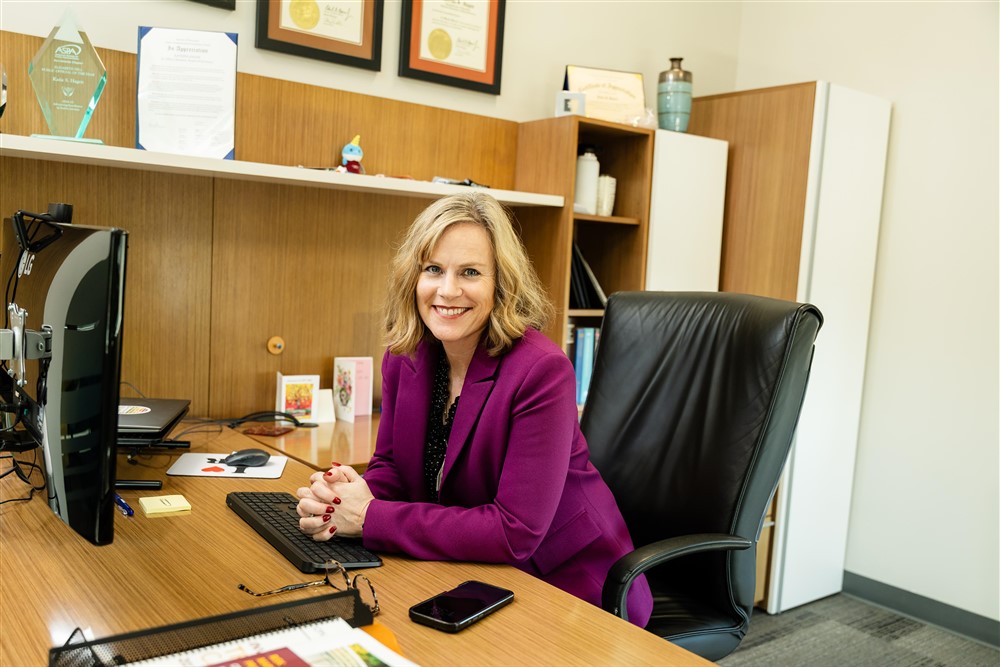
With a distinguished career spanning over 25 years in public service leadership, Katie S. Hagen is a pioneering force in HR modernization and public workforce strategy. Appointed as CEO of CPS HR in 2025, she previously held leadership roles at the California Department of Industrial Relations, CalHR, CalPERS, and CDTFA. Ms. Hagen earned a Master of Public Administration from the University of San Francisco and a Bachelor of Arts in Political Science and French from Humboldt State University.
Find Out How
CPS HR Consulting Can Help You
Every business has unique HR needs. Working together we’ll find the right solution to achieve your goals.
Connect with an HR Professional