SMORs: Small Moments of Reflection that Change how you Lead
If I asked you to pull up your calendar from the last 30 days, what would I see?
Back-to-back meetings.
No margin.
No reflection.
No pause.
Now a harder question:
If someone inferred your values from your calendar alone, what would they conclude?
Because your calendar is more than a scheduling tool. It is a moral document.
It reveals what you protect.
What you prioritize.
What you permit.
And for many leaders, it tells a story of constant motion – but very little space.
Here’s the deeper tension: Are you running your calendar – or is it running you?
Research suggests that the human mind wanders nearly 47% of the time – and that wandering is associated with lower happiness. Layer onto that the reality of modern work: constant context switching, fragmented attention, and minimal recovery time.
Studies show it can take more than 20 minutes to fully regain focus after an interruption. Yet most leaders switch contexts every few minutes.
By mid-afternoon, it’s not that you lack discipline or commitment. It’s that your nervous system is saturated. And there is a leadership cost to that saturation.
When you are cognitively fragmented, you become emotionally thinner.
You react more quickly.
You listen less deeply.
You rush to fix instead of taking time to understand.
In short – you lose the very qualities leadership requires most in complex environments.
So how do we begin to shift this? Not with a complete overhaul. Not with unrealistic time blocks that never hold.
But with something smaller – and surprisingly powerful: SMORs.
Small Moments of Reflection.
These are micro-boundaries built into the flow of your day. Not hours of offsite reflection, but intentional pauses between moments.
Cathy Engelbert, former CEO of Deloitte, is known for scheduling brief SMORs, buffers between meetings, to create space not just to transition logistically, but to reset mentally.
A SMOR can be as short as five or ten minutes.
But its impact is disproportionate.
In that space, you ask:
- What just happened?
- What am I carrying that isn’t mine?
- What tone do I want to set next?
These questions do something subtle but powerful: they return you to yourself.
They create a moment of awareness in a day that would otherwise blur. They allow you to release accumulated tension instead of carrying it forward. They help you show up to the next interaction with intention – not residue. And over time, these small moments compound.
You become more present.
More deliberate.
More aligned with the kind of leader you actually want to be.
This is not about perfection. There will still be full days. Tight timelines. Competing demands. But even in the busiest schedules, there is usually more agency than we assume.
A 10-minute buffer.
A delayed meeting start.
A protected pause before a critical conversation.
These are small choices – but they shape how you lead. So take a look at your calendar again. Does it reflect the leader you aspire to be? Does it create the conditions for clarity, presence, and connection?
If the answer is yes, protect it.
If the answer is no, that’s not failure.
That’s the work.
Because leadership is not just lived in big decisions. It is lived in the spaces between them.
And sometimes, the smallest moments are the ones that change everything.
Leadership today requires more than endurance. It requires the capacity to stay grounded, present, and clear when conditions are anything but. CPS HR supports public sector leaders through executive coaching designed to build that capacity. Our coaching helps leaders strengthen self‑awareness, manage pressure, and lead with steadiness in complex, high‑stakes environments. If you are navigating constant change and want to lead with greater clarity and confidence, learn more about CPS HR’s executive coaching services and how we support leaders doing some of the hardest work right now.
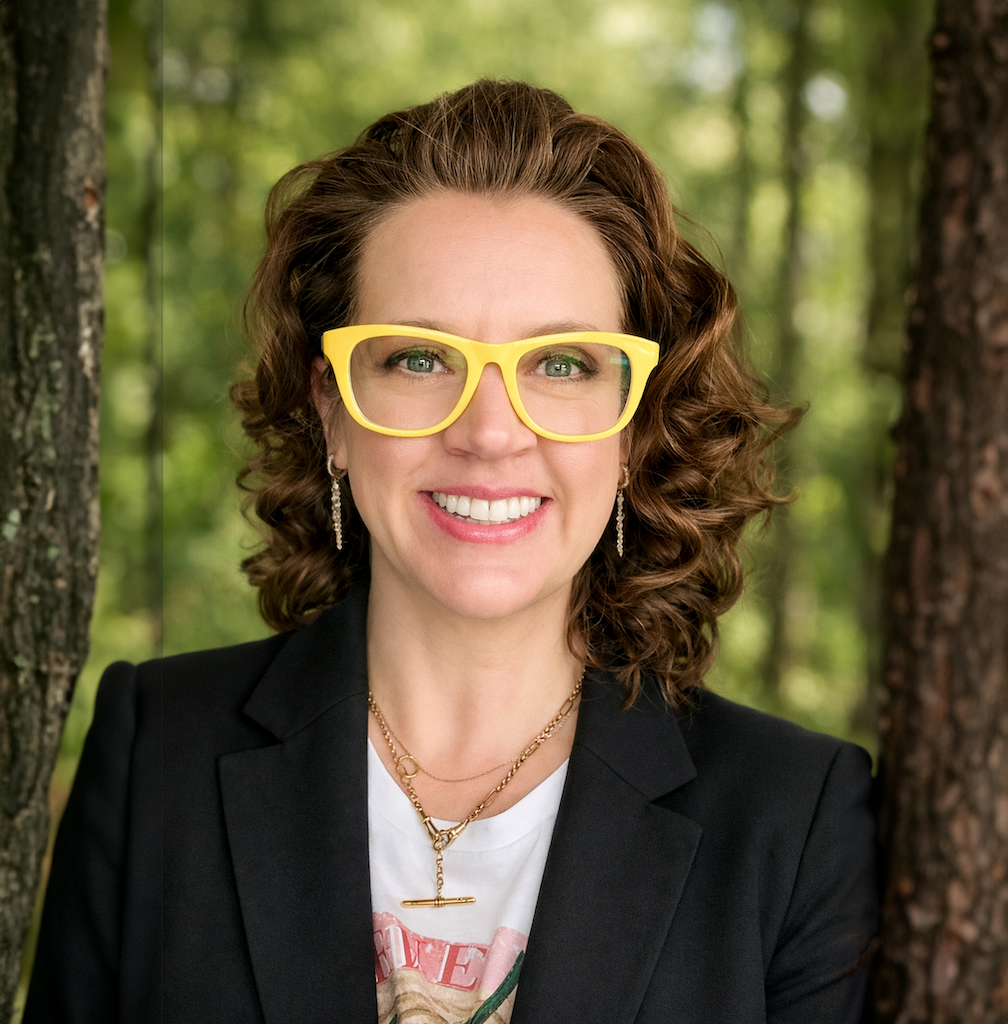
Lisa Kjellström is a global leadership guide, coach, and facilitator who helps leaders navigate complexity by strengthening what matters most: trust, emotional intelligence, and human connection.
With nearly two decades of experience, she designs transformative programs and storytelling-driven experiences that help leaders pause, reflect, and lead with greater clarity and presence. Her work centers on helping people become a steady, grounded force for their teams – especially in times of uncertainty – while shaping cultures rooted in trust and meaning.
Ready to learn more? Explore related resources:
Find Out How
CPS HR Consulting Can Help You
Every business has unique HR needs. Working together we’ll find the right solution to achieve your goals.
Connect with an HR Professional